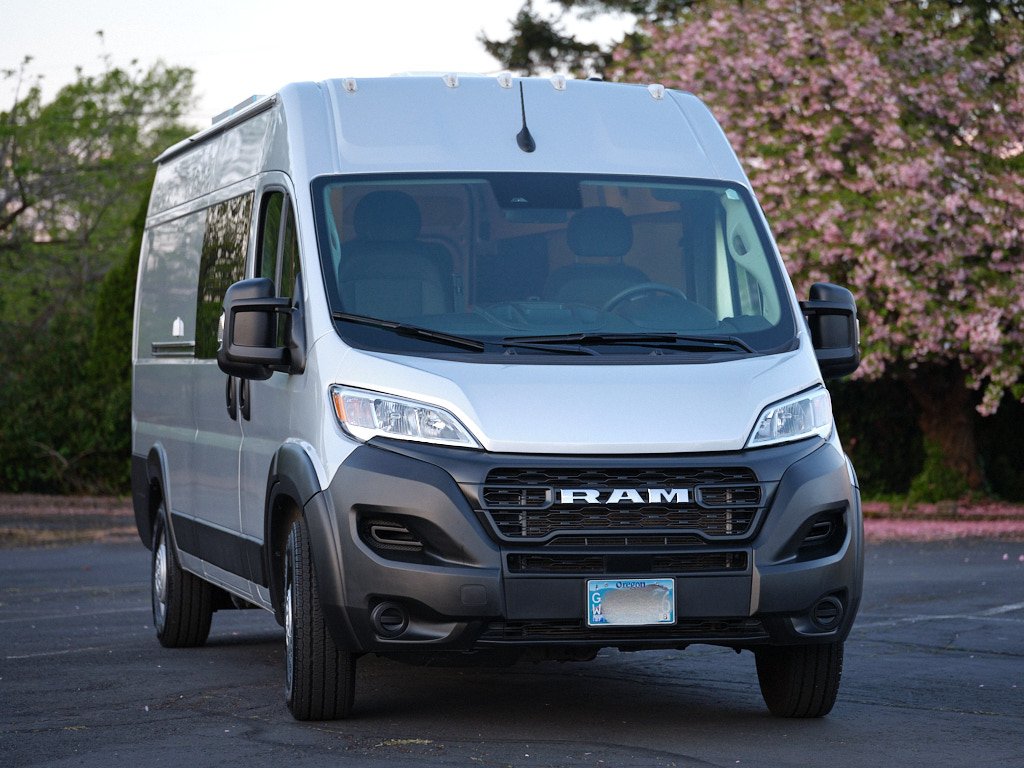
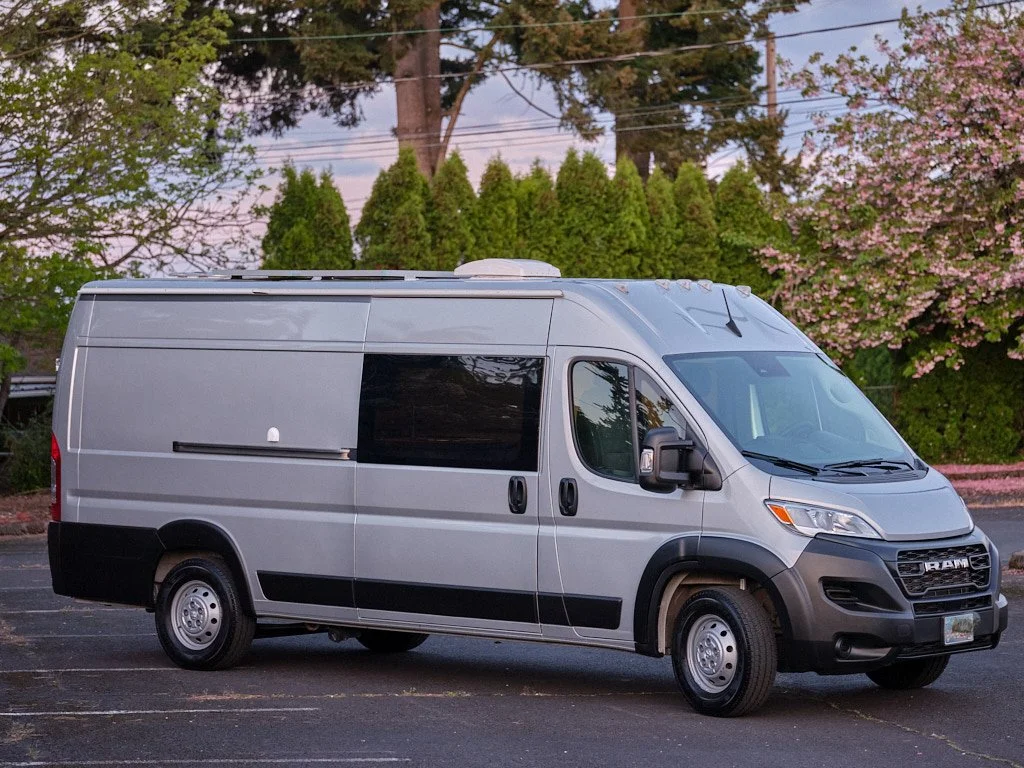
2023 Ram ProMaster 3500 — 159" Extended High Roof
Built by a master electrician for full-time, four-season, off-grid living
I bought this van new and built it myself, for two people and two large dogs, with the intention of living in it.
I'm a master electrician. I spent my career working on equipment built for rugged environments, and that's the standard I held this build to.
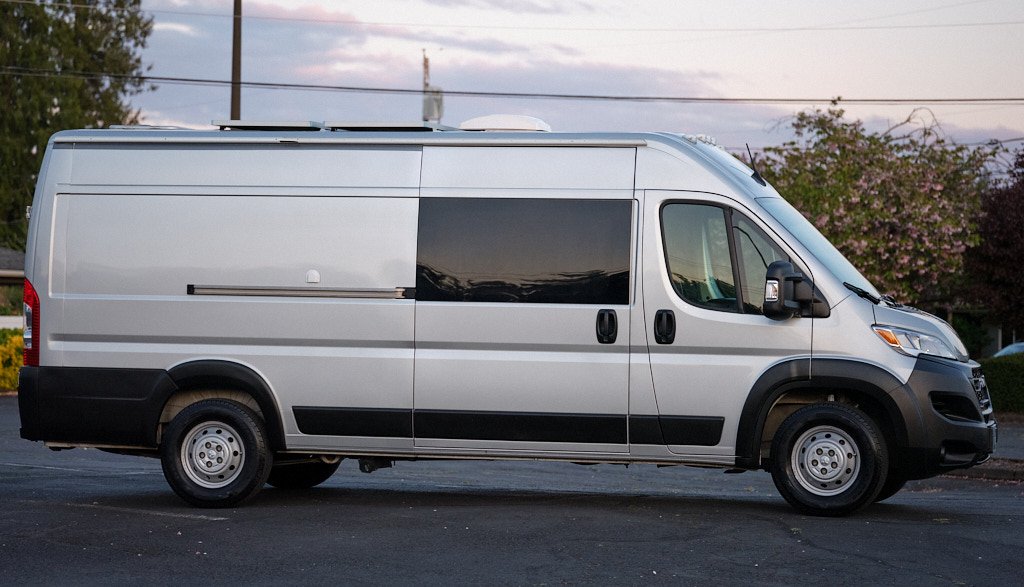
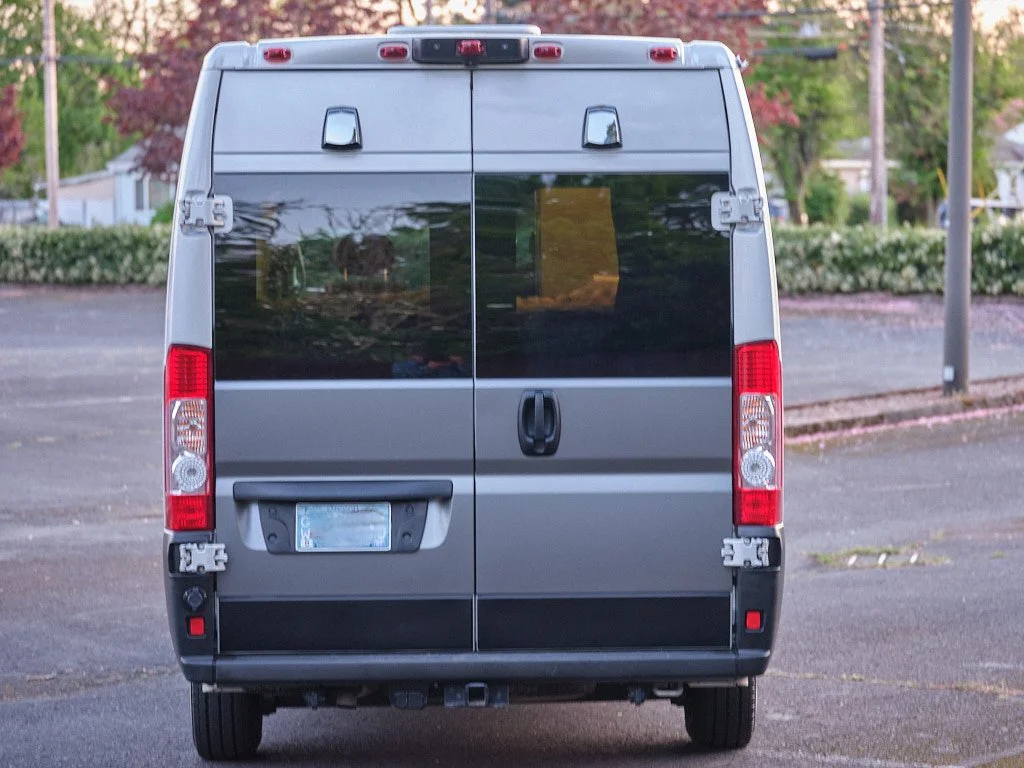
This is the 159" extended chassis. That's fourteen inches longer than the standard 159" that nearly every other ProMaster conversion is built on, and it was a $15,000 factory option when I ordered it. Those fourteen inches are what make room for a full-size bed, a four-foot galley, and a real dinette without the inside feeling like a hallway.
It's built to take you anywhere you want to go and keep you comfortable for as long as you want to stay. It is quiet, and it will hold seventy degrees inside when it's twenty below outside.
- Chassis — 2023 Ram ProMaster 3500, 159" WB Extended, High Roof
- Engine — 3.6L V6, 9-speed automatic
- Mileage — 58,000
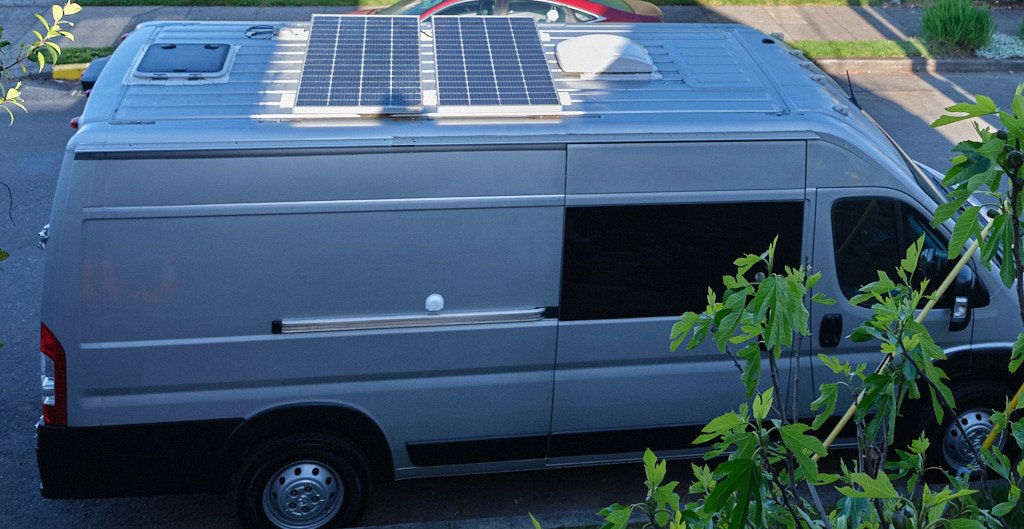
- Power — 400Ah lithium, 400W solar, 2000W pure sine inverter
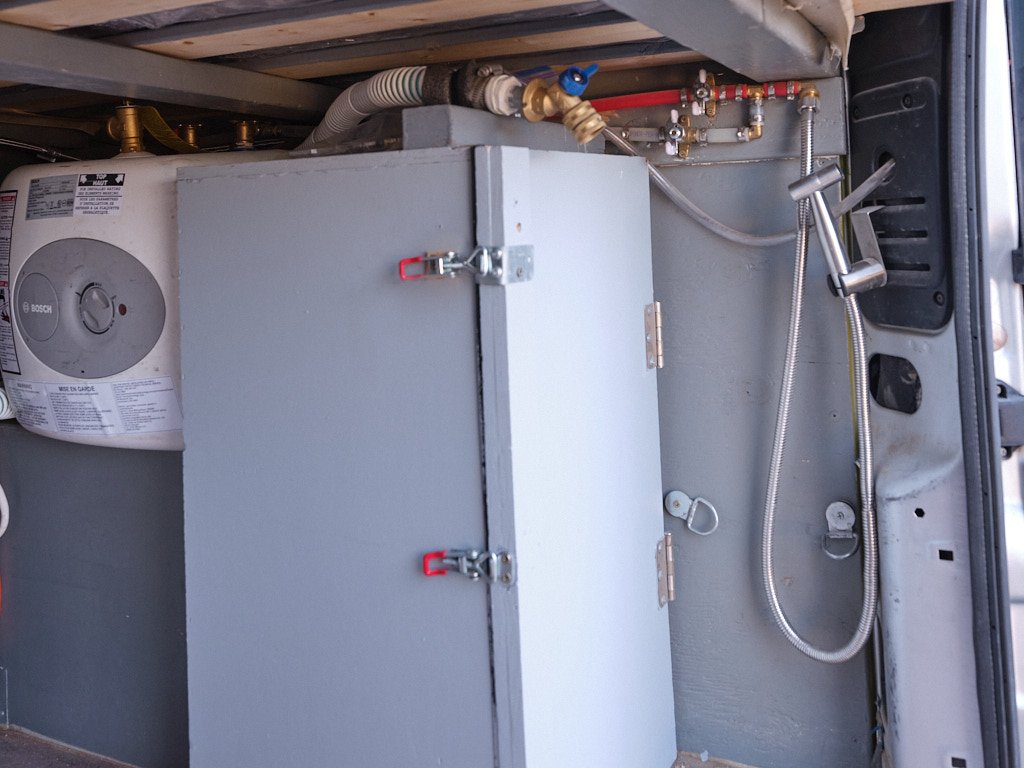
- Water — 40 gallons fresh, 26 gallons grey, hot water on demand
- Sleeps — 2, plus a third with the cab guest bed
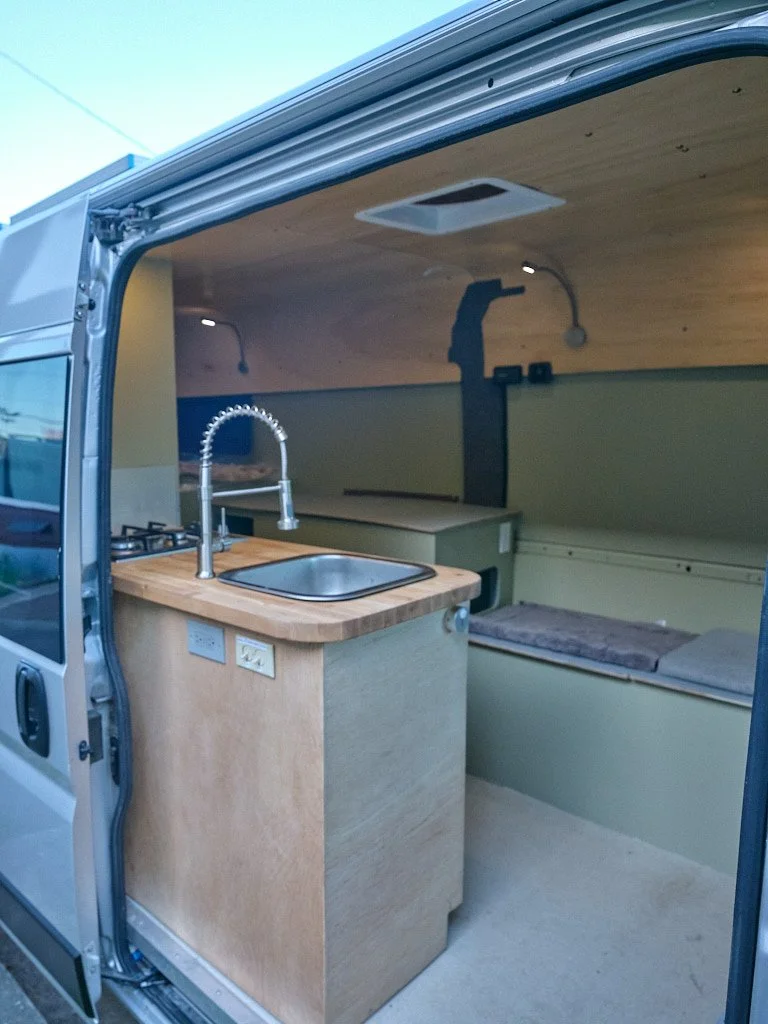
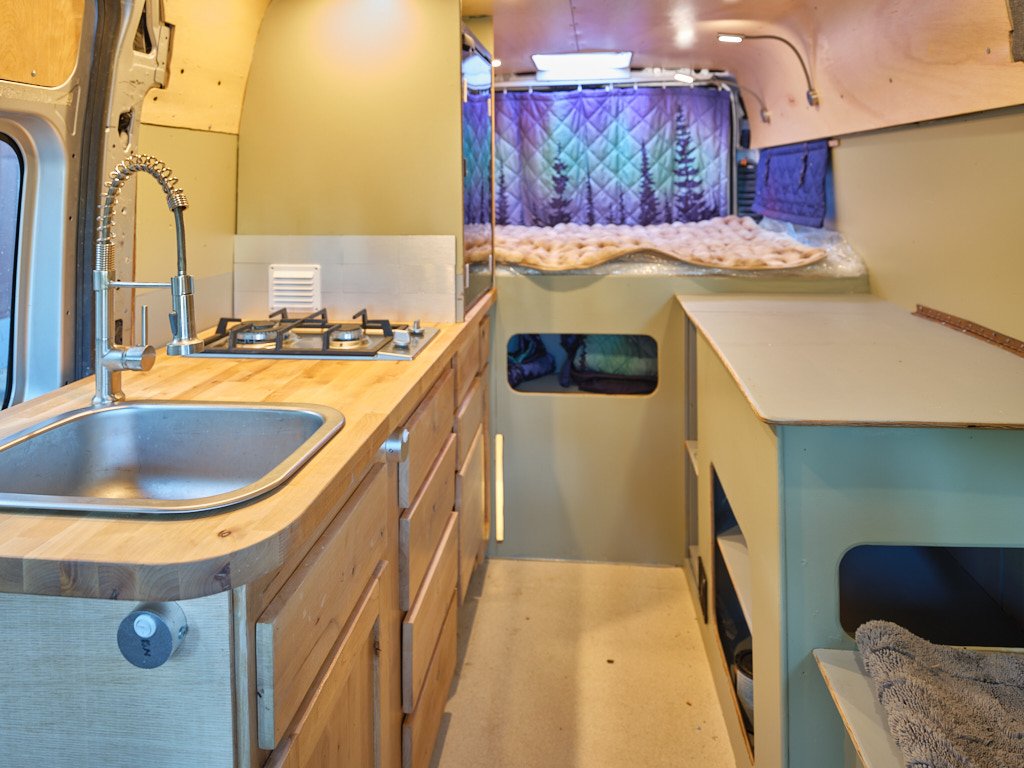
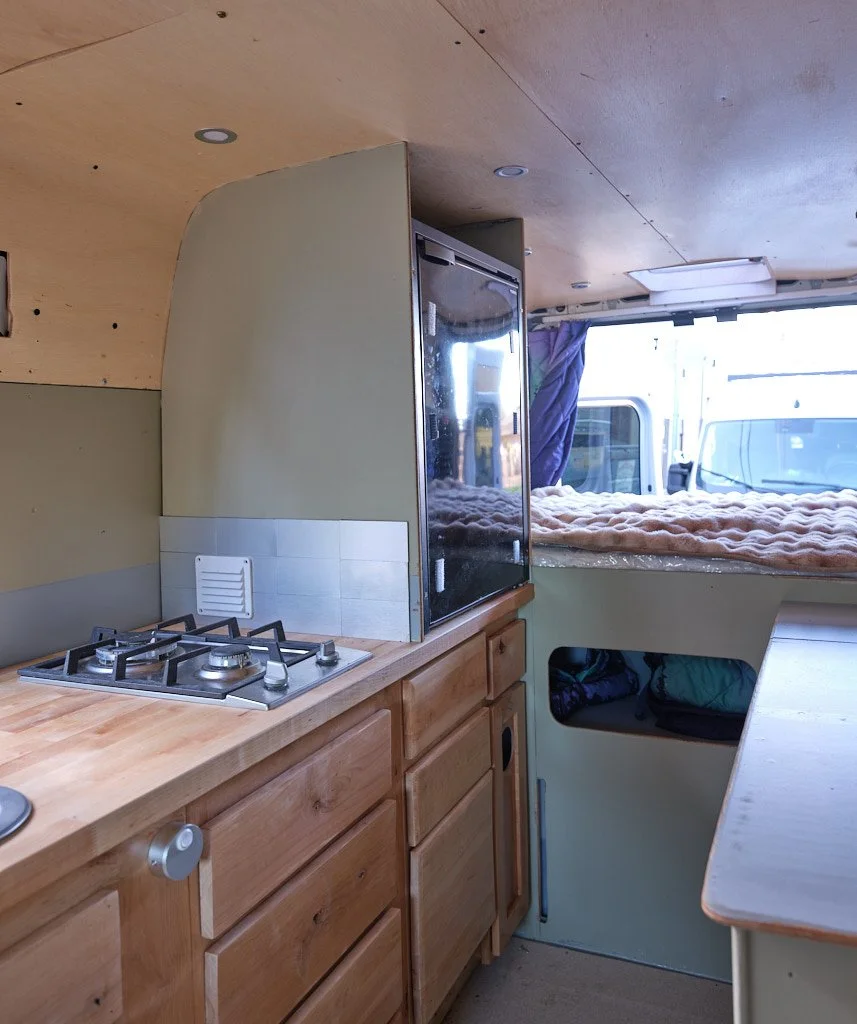
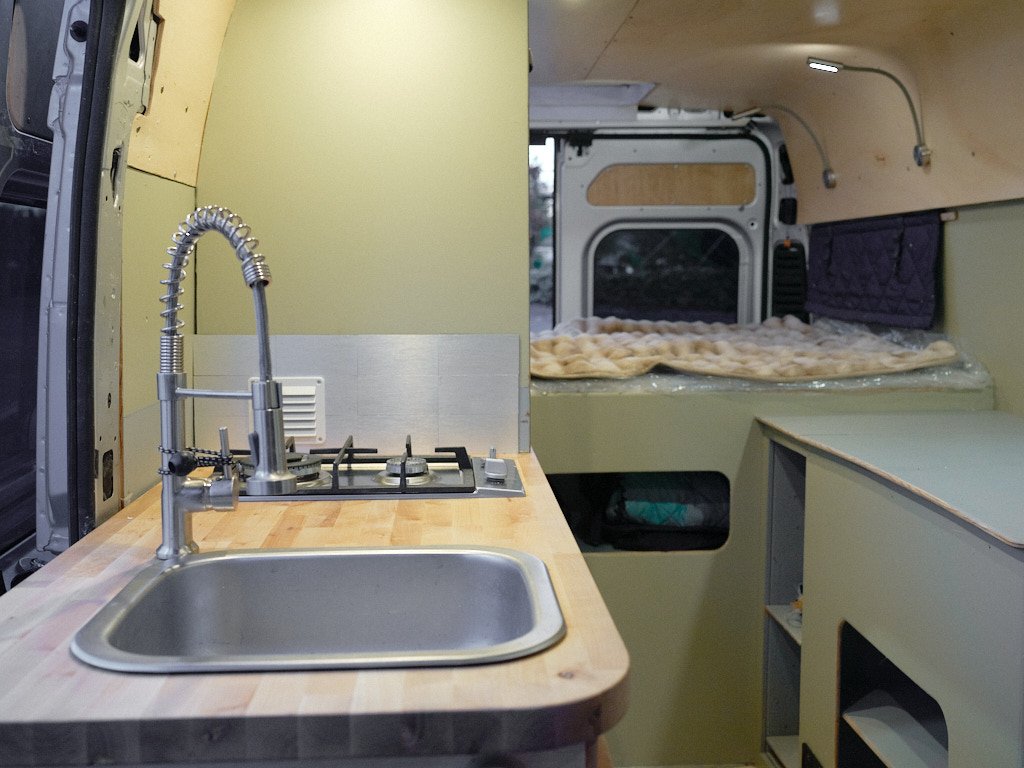
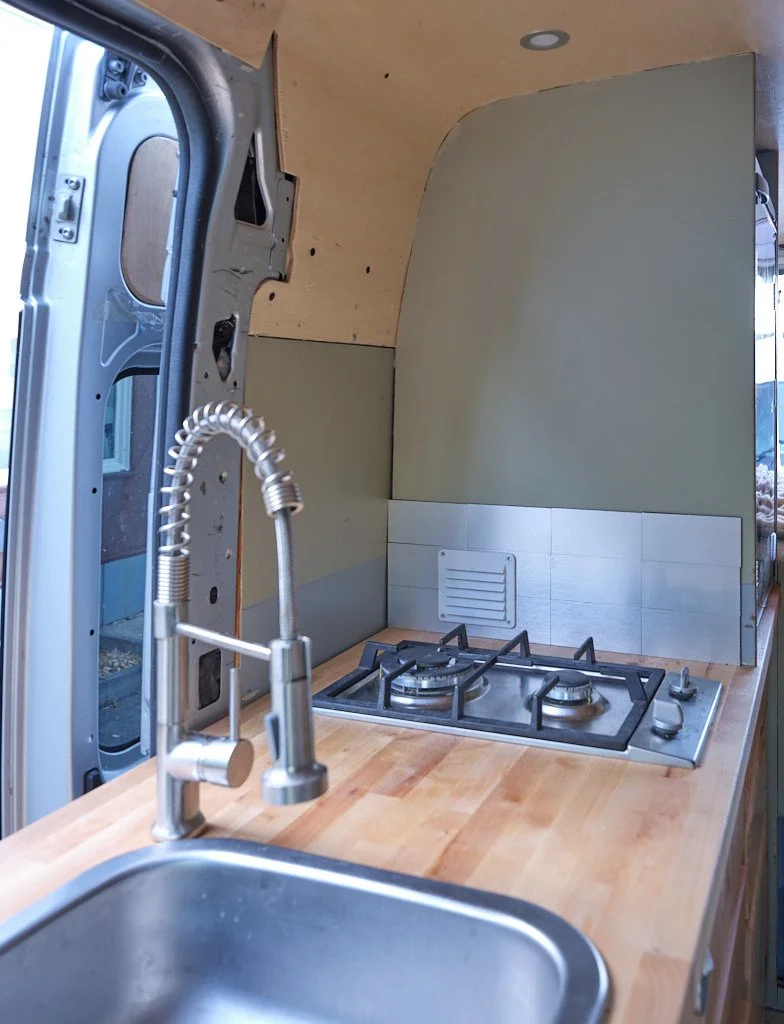
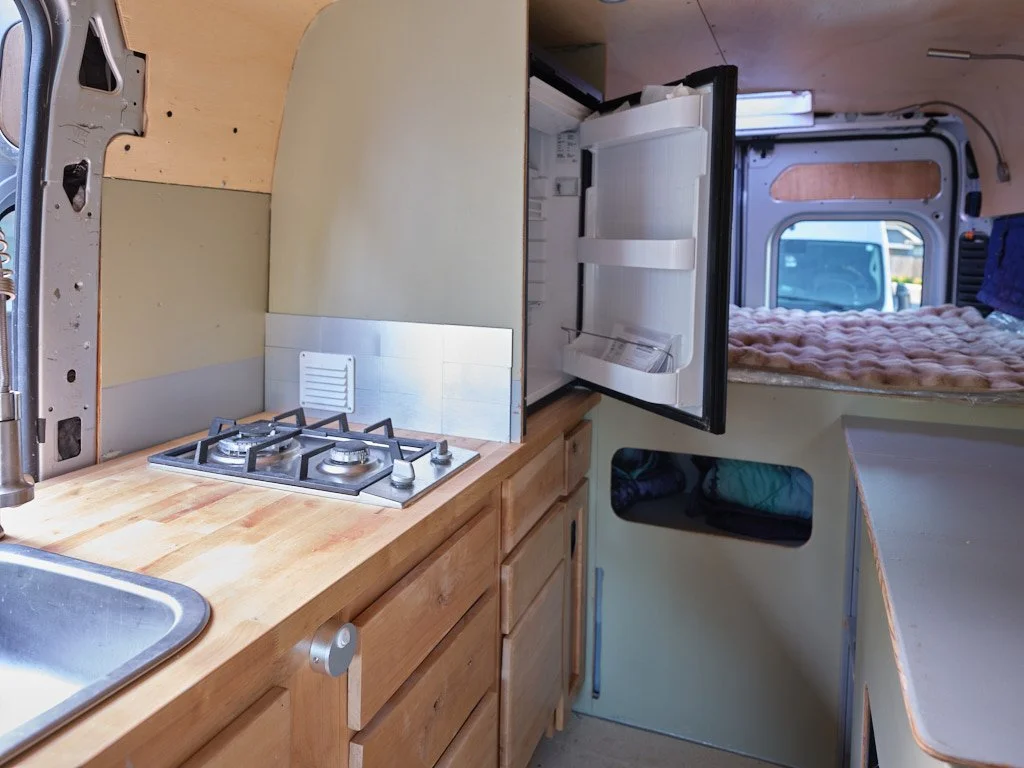
- Galley — 4.2 cu ft Vitrifrigo 12V fridge/freezer, 2-burner propane cooktop
Step inside
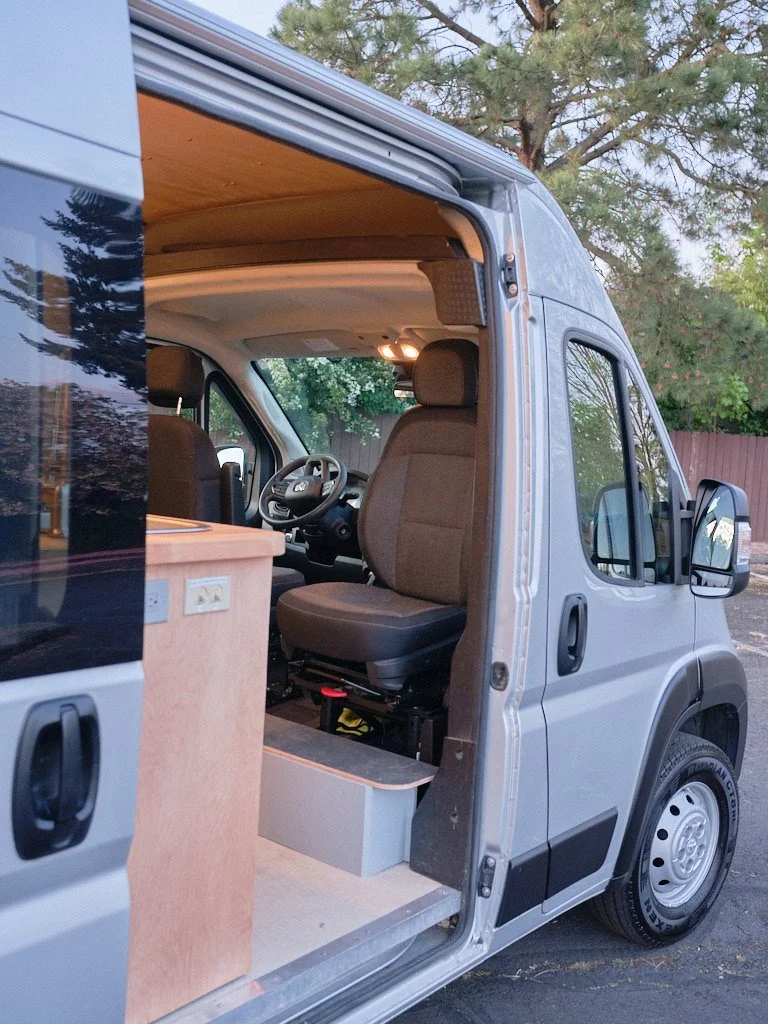
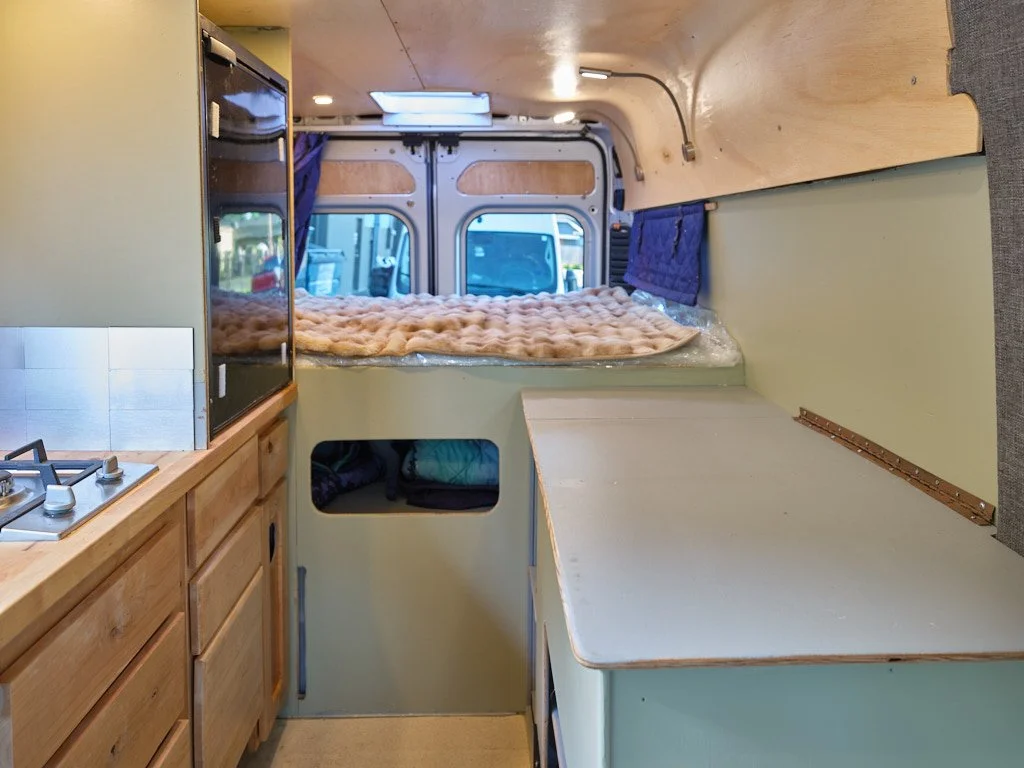
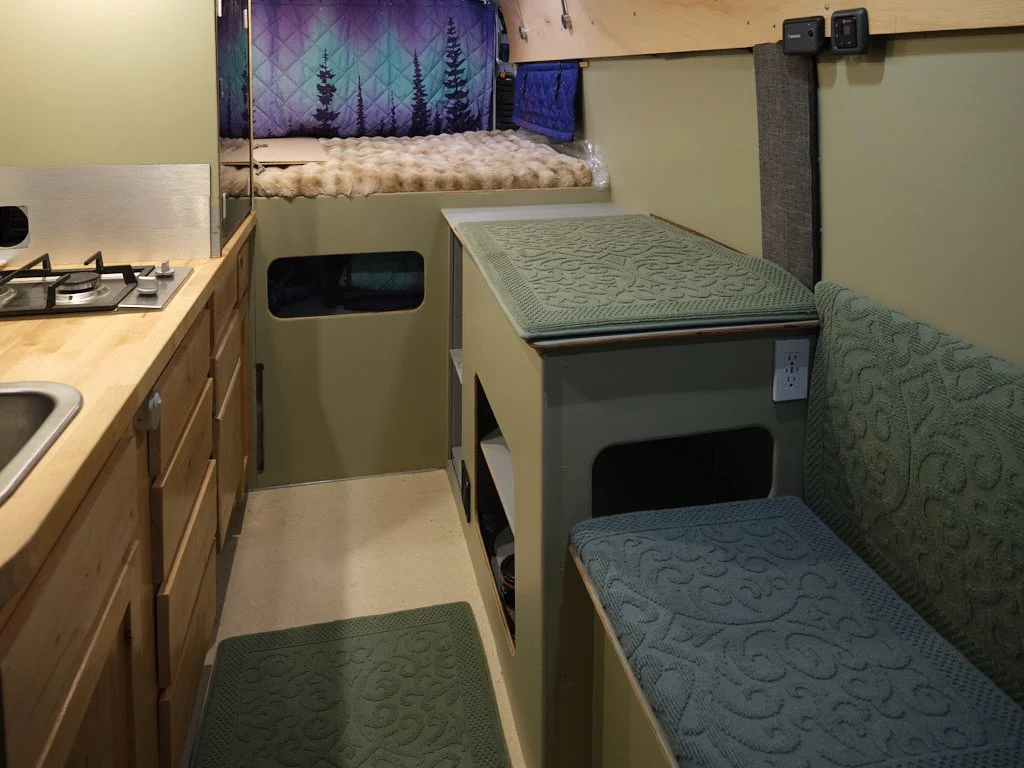
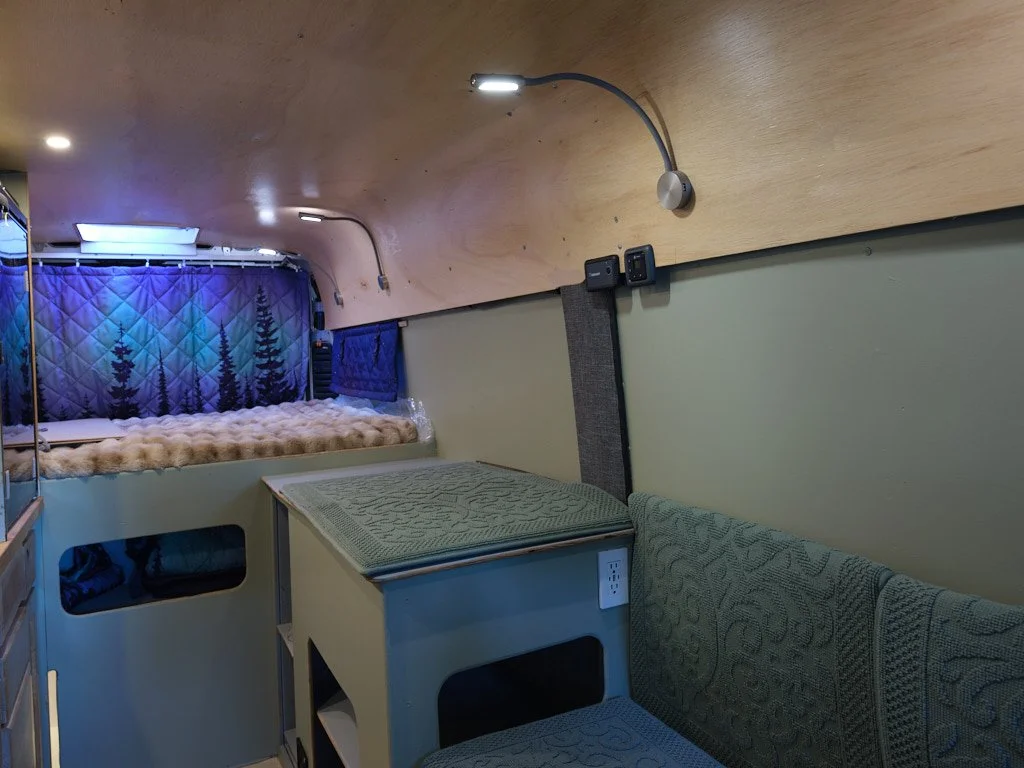
I built the cabinetry to maximize storage without making the van feel crowded or commercial. Warm custom cabinets, commercial-grade vinyl flooring and a four-foot birch countertop give the inside the feel of a beautifully designed tiny home.
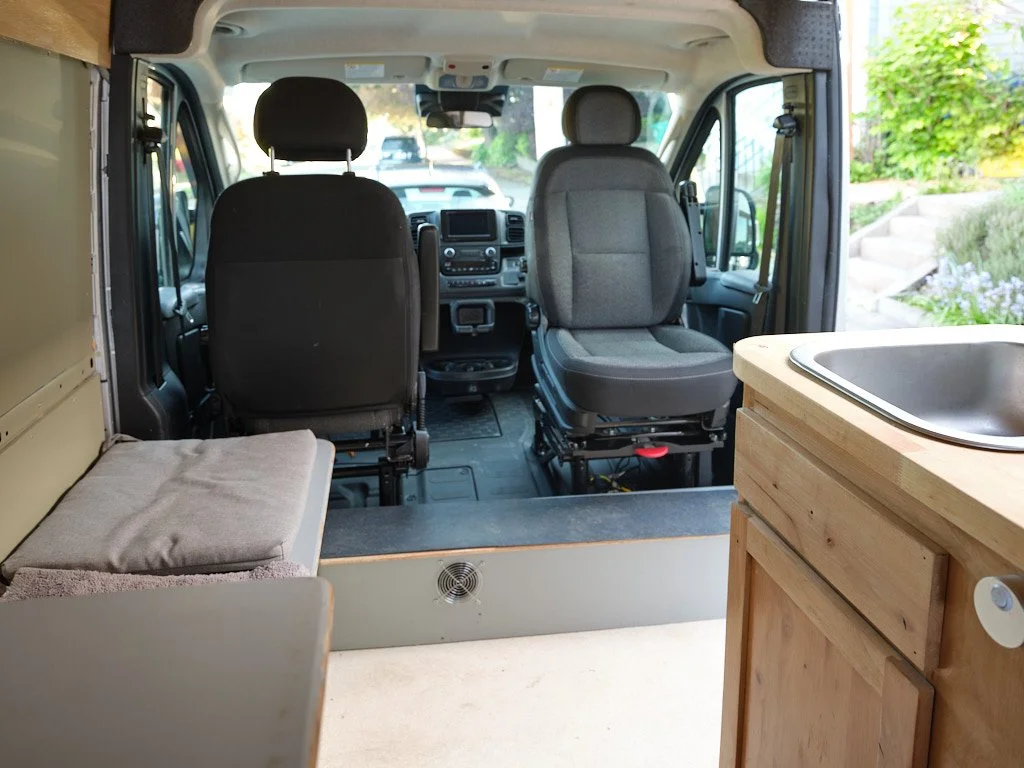
The passenger seat swivels to turn inward toward the living area, so the front of the van becomes a gathering space around the four-foot cushioned bench.
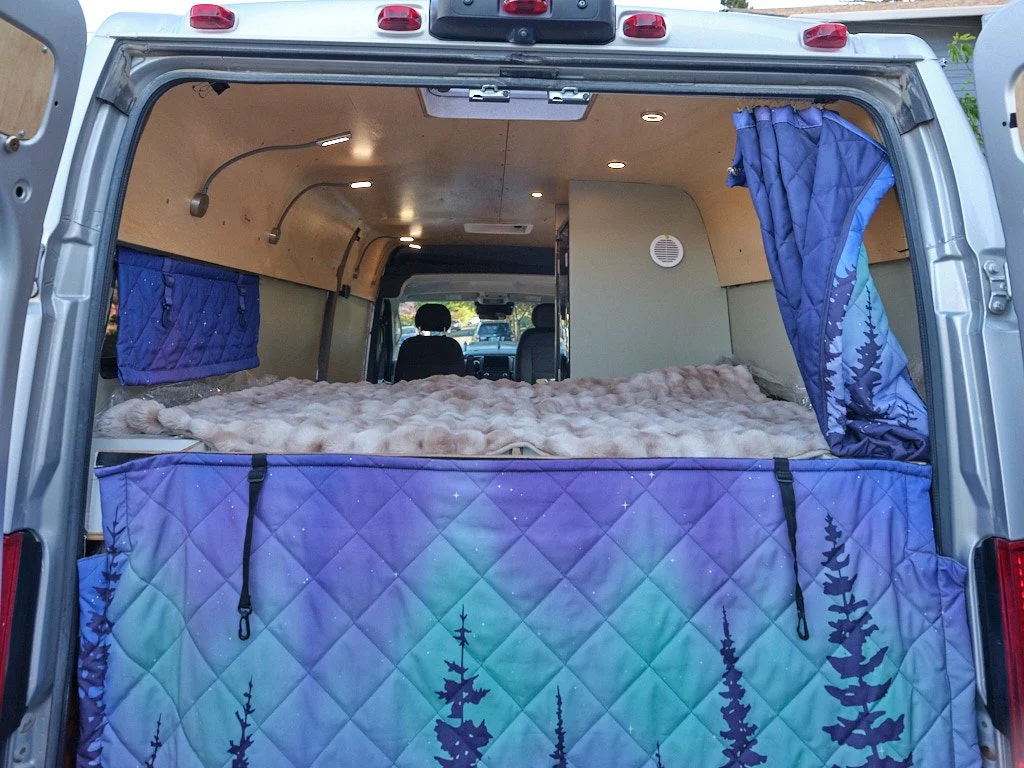
There's a built-in kennel and dog bed designed for a 75lb dog, with the option of a second bed above it for a bunk system — or use that space for storage instead.
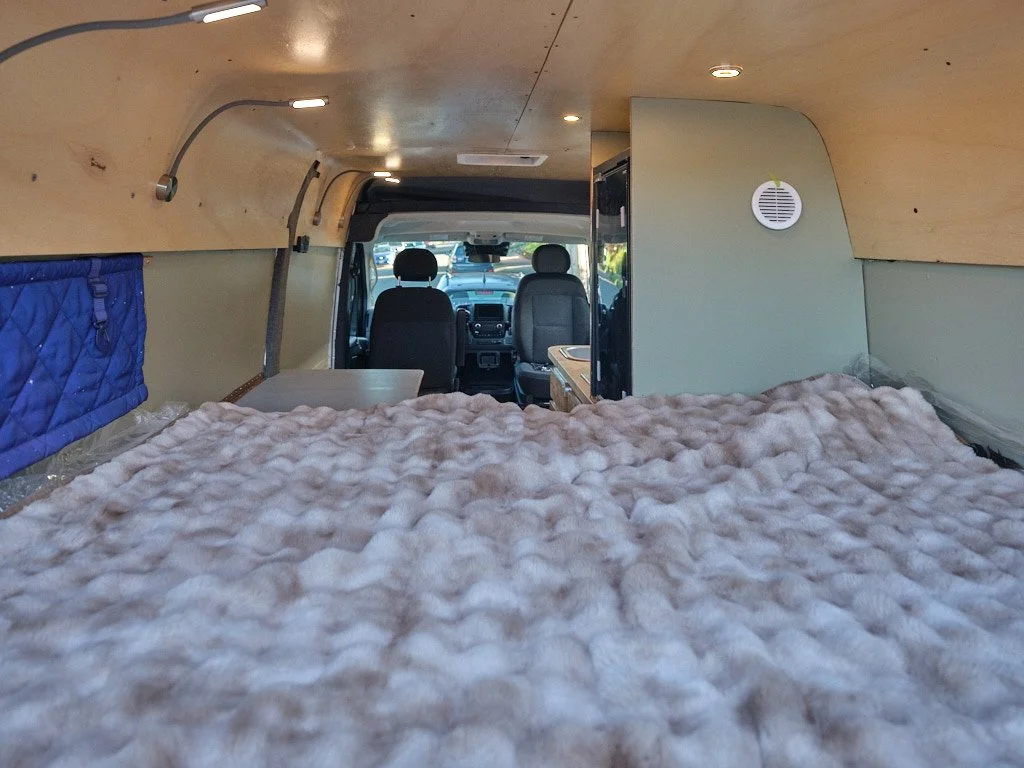
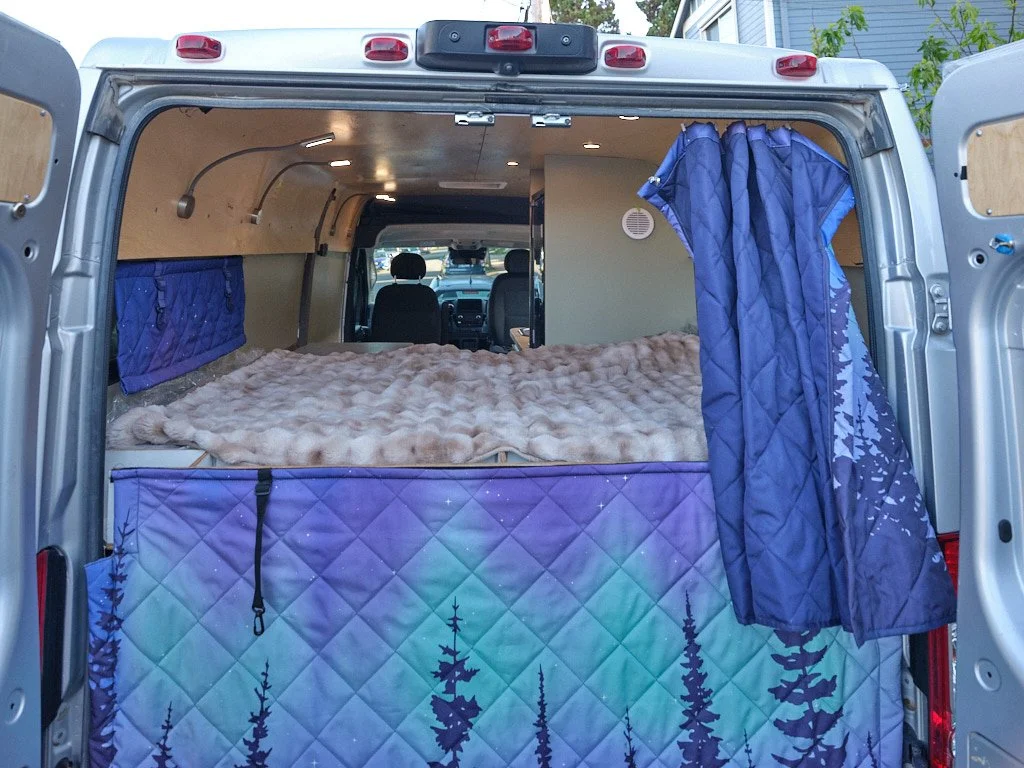
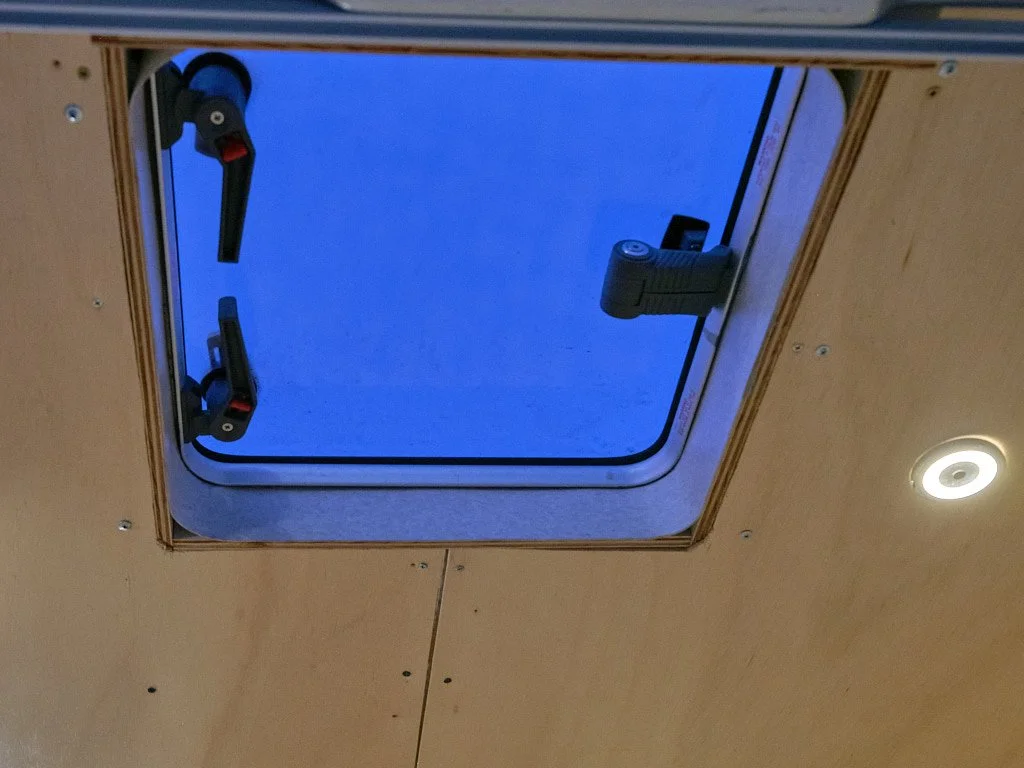
The bed is a new 8-inch gel memory foam mattress, 75" x 54". Two reading lights, four ceiling lights, rear USB outlets, a 32" sliding window with a screen, and a 24" x 24" openable skylight hatch to stargaze through, photograph from, or just let more air in.
Where this van is different
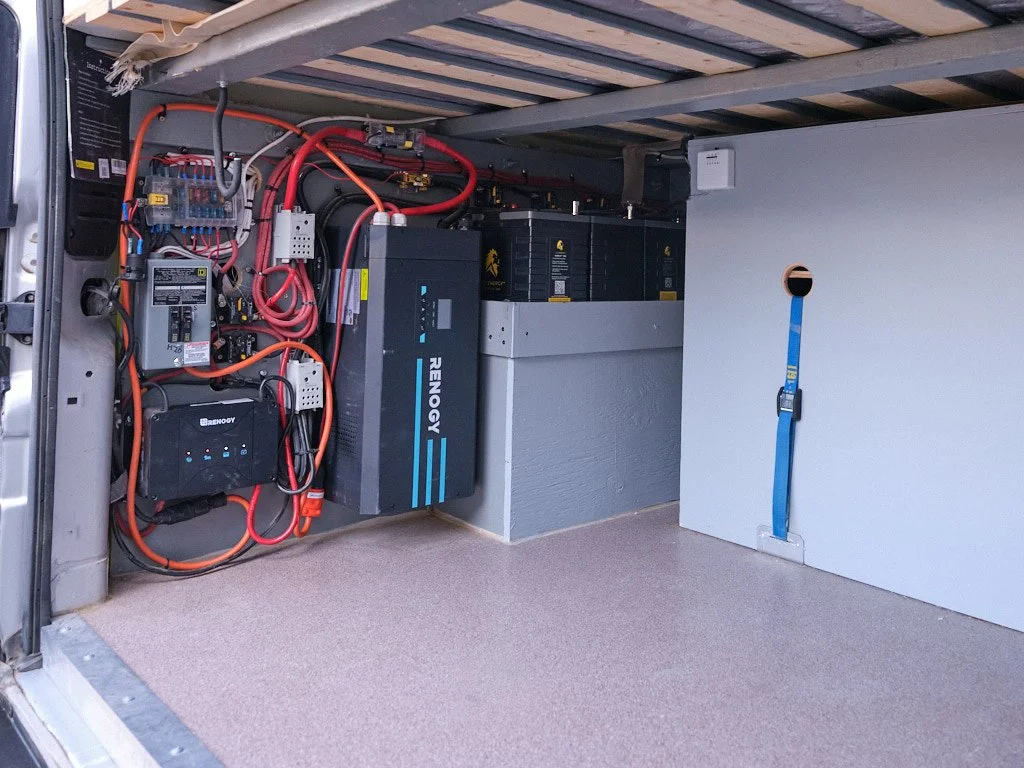
Most van conversions look good in photographs. What matters is the wiring behind the panels, and that's the part almost nobody will show you.
I'm a master electrician. I spent my career on equipment built for rugged environments, and I built this system the same way.
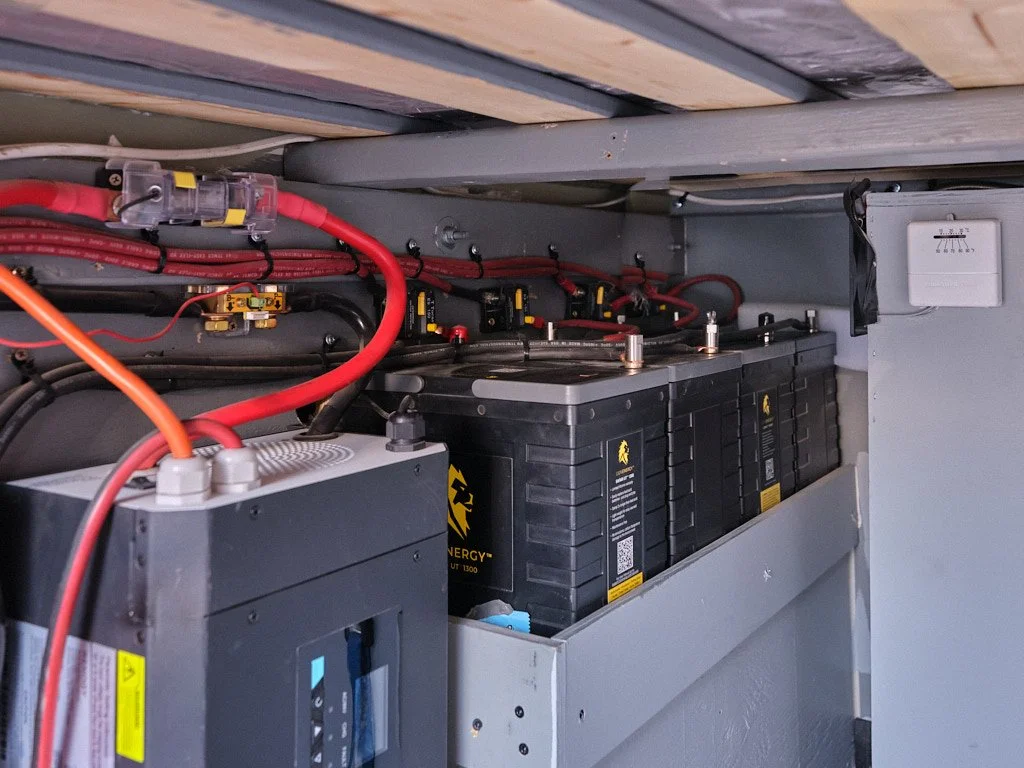
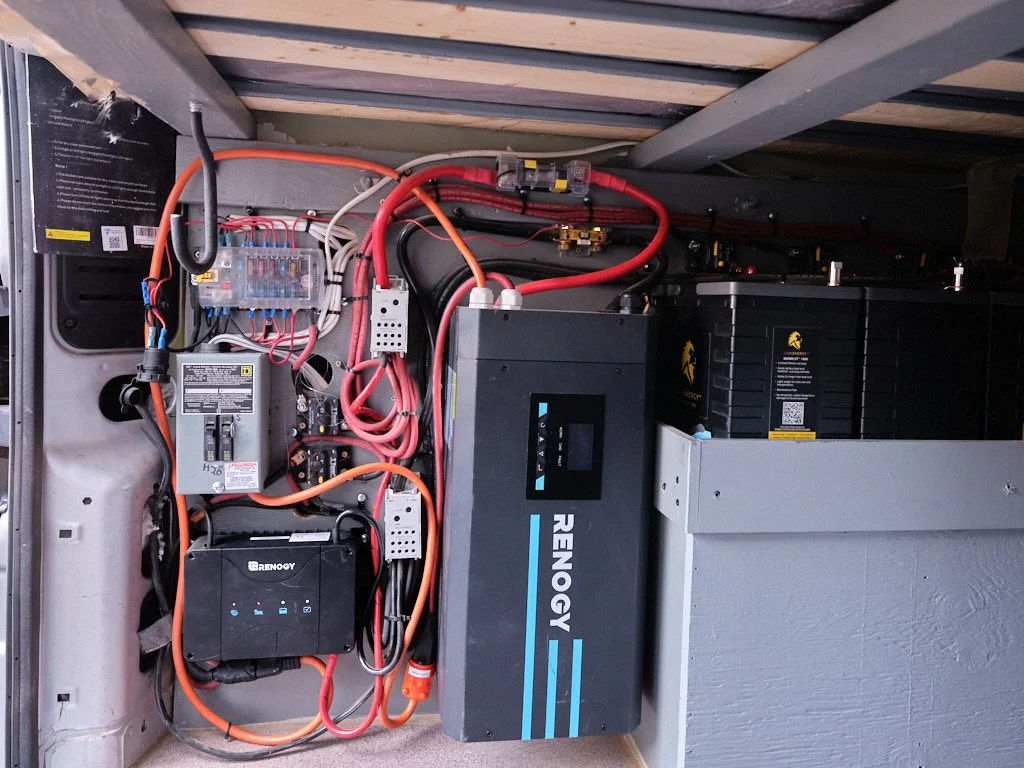
Every run in this van is marine-grade flexible wire. I used it because it holds up to the vibration of a vehicle in motion, where solid conductor eventually doesn't. The house system is completely isolated from the van's starter battery. There's a dedicated 12V DC fuse block, properly sized breakers, and labeled terminations throughout.
- 400 amp hours of Lion Energy lithium — four 100Ah batteries
- 400 watts of rooftop solar — two 200W Renogy panels
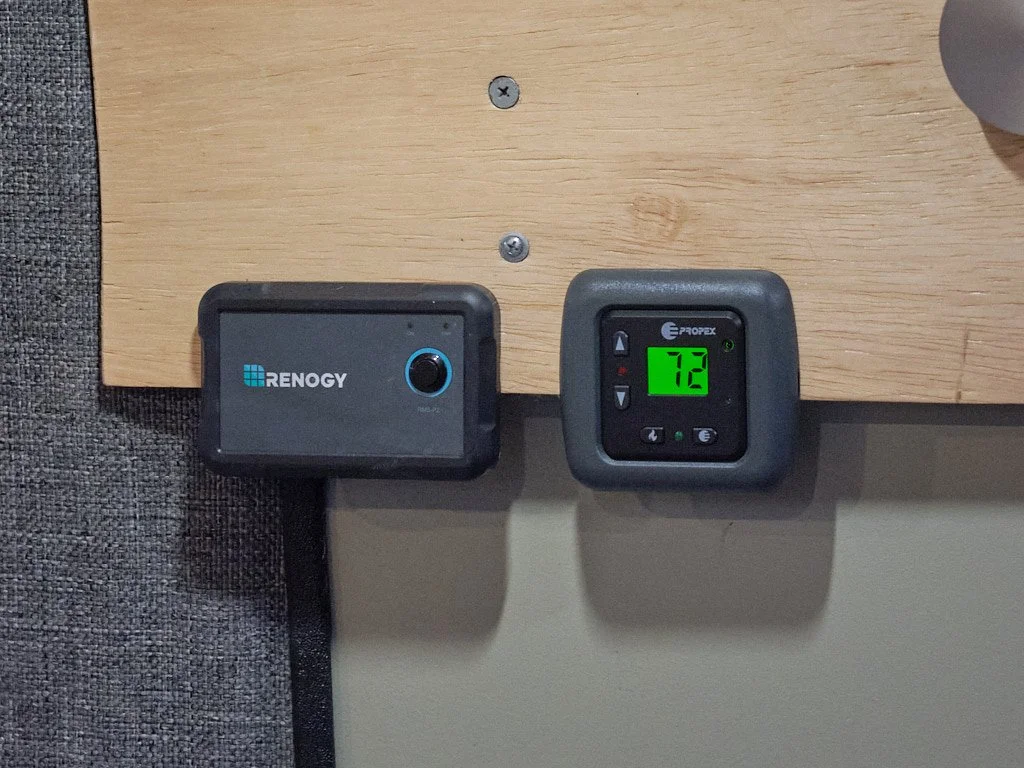
- Three ways to charge — solar, the 220A alternator through a Renogy 50A DC-to-DC MPPT controller, or 120V shore power
- 2000 watt Renogy pure sine wave inverter/charger — pure sine wave costs more and puts out cleaner electricity, which matters when you're running cameras, laptops or editing gear
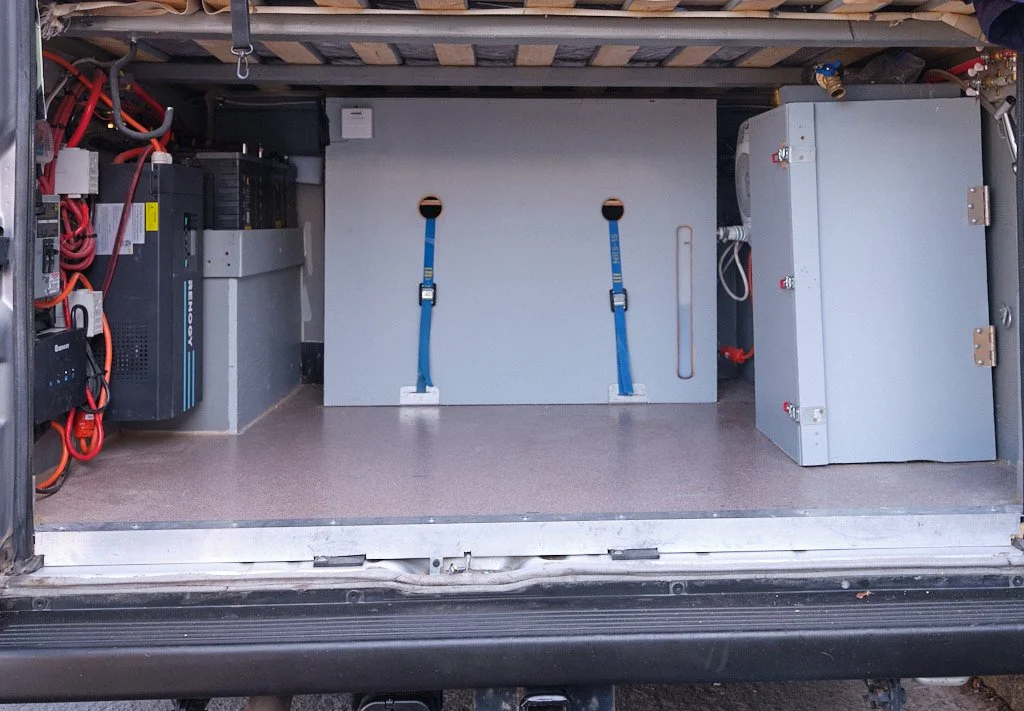
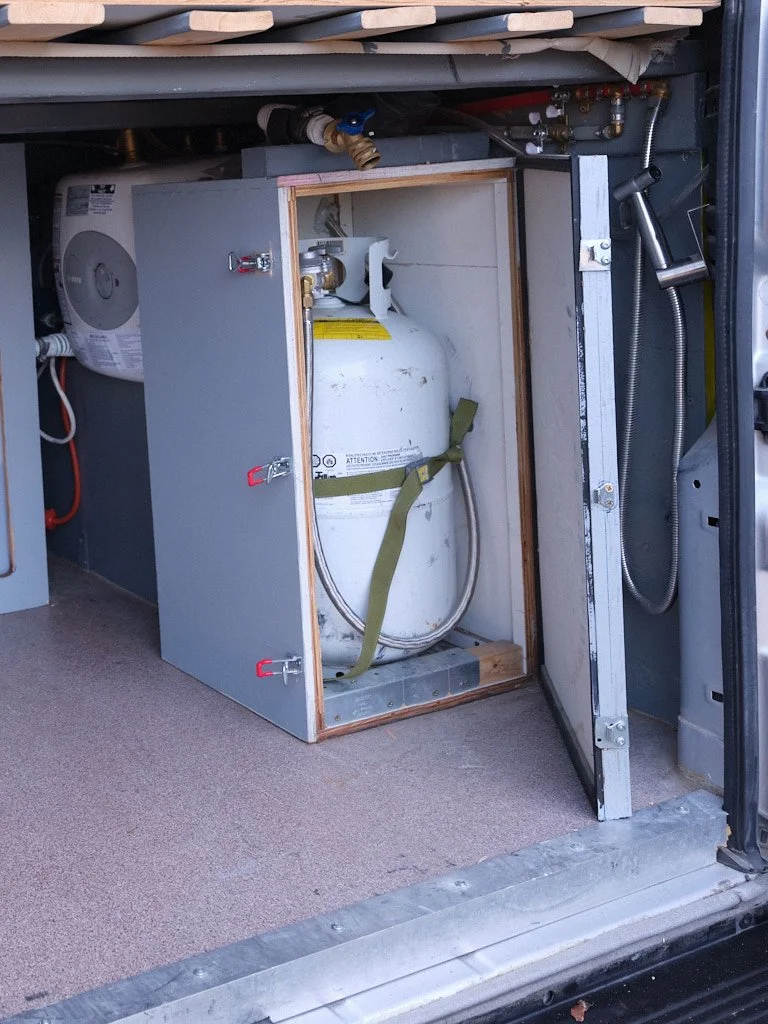
The photographs below are of the actual installation. Compare them to anything else you're looking at.
Warm at twenty below
I used 3M Thinsulate throughout. It doesn't hold moisture, so your van doesn't rust from the inside, and it doesn't settle over time and leave you with cold spots the way other insulation does. I added rigid foam board where it helped, and there's 7/8" rigid foam under the floor decking. Perfect for warm toasty feet.
Heat is a Propex HeatSource HS2800, 10,000 BTU forced air, with a digital thermostat. It draws its combustion air from outside and exhausts outside, so there is no path for carbon monoxide into the living space. It also won't give you high-altitude problems. Yes — 70 degrees inside at twenty below zero.
For warm weather I went with ventilation rather than air conditioning. A MaxxAir 10-speed roof fan, a 24" x 24" openable skylight and a 32" sliding screened window move air through the same insulation package that keeps the heat out. It's how most full-timers do it, it's quieter, and it draws a fraction of the power. If you ever want to add air conditioning, the electrical system has plenty of headroom for it.
Carbon monoxide and smoke alarm, propane leak detector, and Sumo shocks front and rear for driving stability.
Straight answers
Mileage. 58,000 miles. I'm the original owner and it has been maintained to the letter — every service done by a Ram dealer or a certified mechanic, oil changes around every 5,000 miles, 2,000 before they were required, and never at a quick lube.
Factory warranty still active. The Ram drivetrain warranty is still in force and it transfers to you with the van — about 2,000 miles remain on the 5-year, 60,000-mile coverage. Very few used vans come with any factory coverage left at all.
A small amount of trim detail is unfinished. I'm happy to finish it, or to deduct the value from the price if you'd rather do that work yourself.
Interested?
The van is in Portland, Oregon. I'm happy to show it to a qualified buyer — get in touch and we'll set up a time.